Finance website
Empower Capital
Give borrowers a clear starting point.
Empower Capital brings loan information, borrowing calculators and appointment requests into a responsive website. A staff admin area supports enquiry management and public content updates.
View screenshots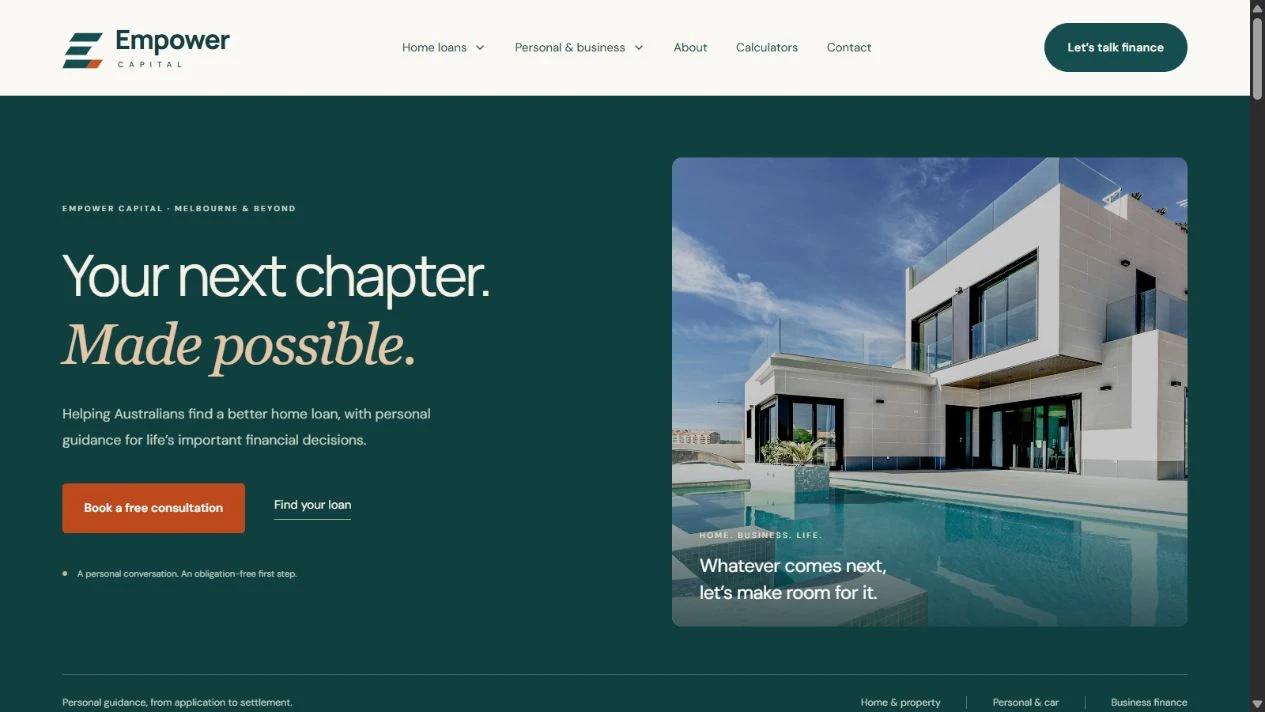
Project case study
The brief
Empower Capital needed a public website that helps borrowers find the right information and gives staff a way to handle resulting enquiries. The redesign connects loan education, calculators and a consultation request in one journey. It also preserves existing entry points so a visitor following an older loan or application link can still reach the relevant content.
The borrower journey
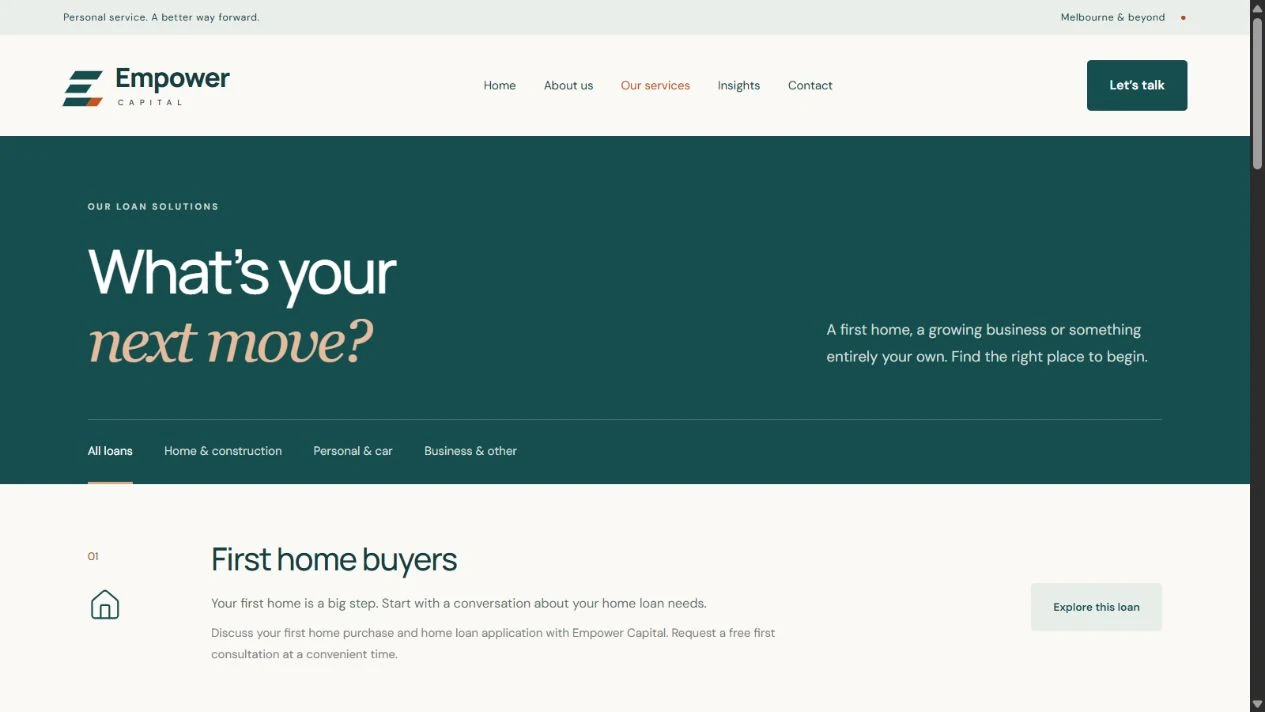
The homepage introduces the brokerage and routes visitors to dedicated pages for first-home buyers, personal loans, car loans and other loan types. The loan pages explain what a borrower can compare, what the process looks like, and which tool or next step is relevant. The application journey explains the stages from application and submission through to approval and settlement.
A first-home buyer can read the servicing information, model monthly repayments, and request a consultation with a preferred contact time. The contact form records the service or loan topic and can capture additional context, such as postcode and employment type, for staff to review.
Making the calculators understandable
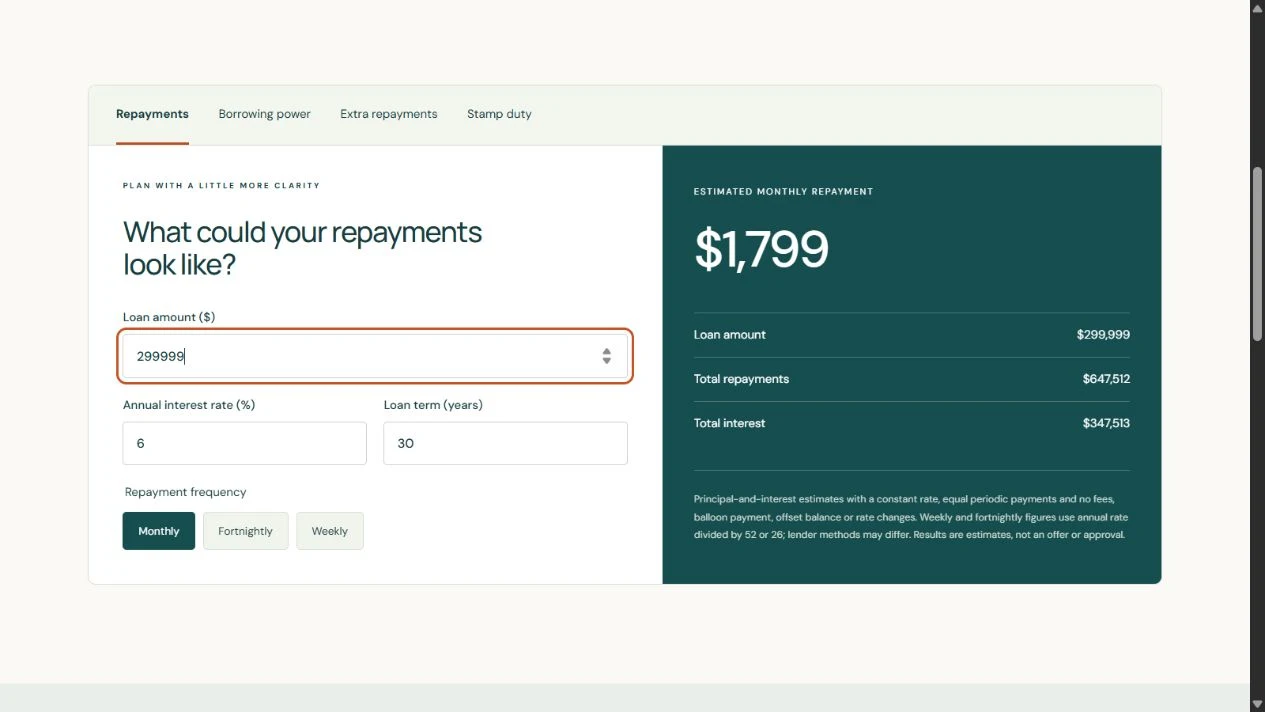
The calculator suite covers recurring repayments, budget-based borrowing illustrations, extra repayments and standard Victorian stamp duty. The repayments tool lets visitors compare weekly, fortnightly and monthly principal-and-interest estimates. The extra-repayment tool helps show how a change in payments could affect interest and time. Assumptions and exclusions appear next to the results, and the Victorian duty calculator states its scope and links to rate references.
The staff workflow and implementation
Appointment requests and general enquiries are stored for staff to review and update in the admin area. Staff can also maintain public content, including team and lender collections, and prepare Insights articles as drafts. That keeps routine website updates within the same system as incoming requests.
The frontend uses React and TypeScript. A PHP API stores application data in MySQL or MariaDB, and the release is designed for Apache-compatible hosting. Redirects and route handling preserve older PHP public URLs as well as links to the new loan pages.
More screenshots