Lead intelligence
Lead Atlas
Build a prospect list around your ideal customer.
Lead Atlas discovers businesses from public data, merges duplicate records and enriches prospects. It scores each lead against an ideal customer profile and provides written reasons for the score.
View screenshots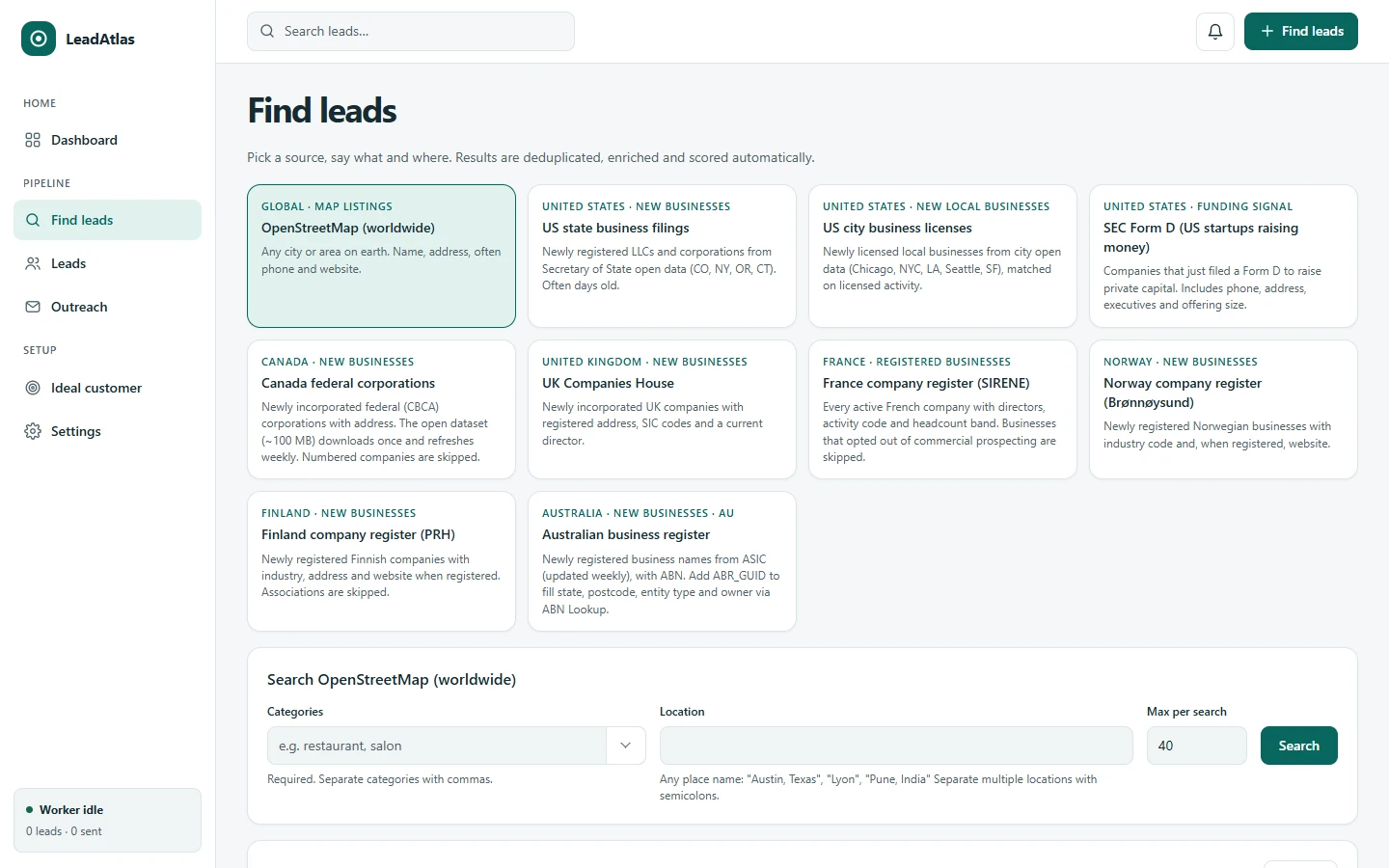
Project case study
The problem
A team can collect thousands of business records and still struggle to decide which ones deserve attention. Lead Atlas builds a shortlist around the team's ideal customer profile. Each scored lead includes reasons, giving an operator a way to understand why it was prioritised before reviewing or contacting it.
Building a reliable prospect record
An operator chooses a source, category and location to create a search job. In addition to map data, the project supports selected public business registers, licensing datasets and CSV imports. When the same company appears in multiple sources, matching can use the source identifier, website domain, or business name and postcode. The prospect record then becomes the place to review the combined evidence.
The enrichment worker checks a small set of likely pages for public business contact information and signals such as hiring, a recent registration, or a weak web presence. When the website is missing from a source listing, the worker checks candidate pages for matching business details. Contact evidence distinguishes addresses found in a source from inferred addresses.
Scoring and outreach
The ideal customer profile defines what makes a prospect relevant. A lead receives a score from 0 to 100 with a written explanation. To qualify, it must meet the score threshold and have a contact route. For example, a team looking for recently formed businesses can review which records matched that signal and which also have an address suitable for outreach.
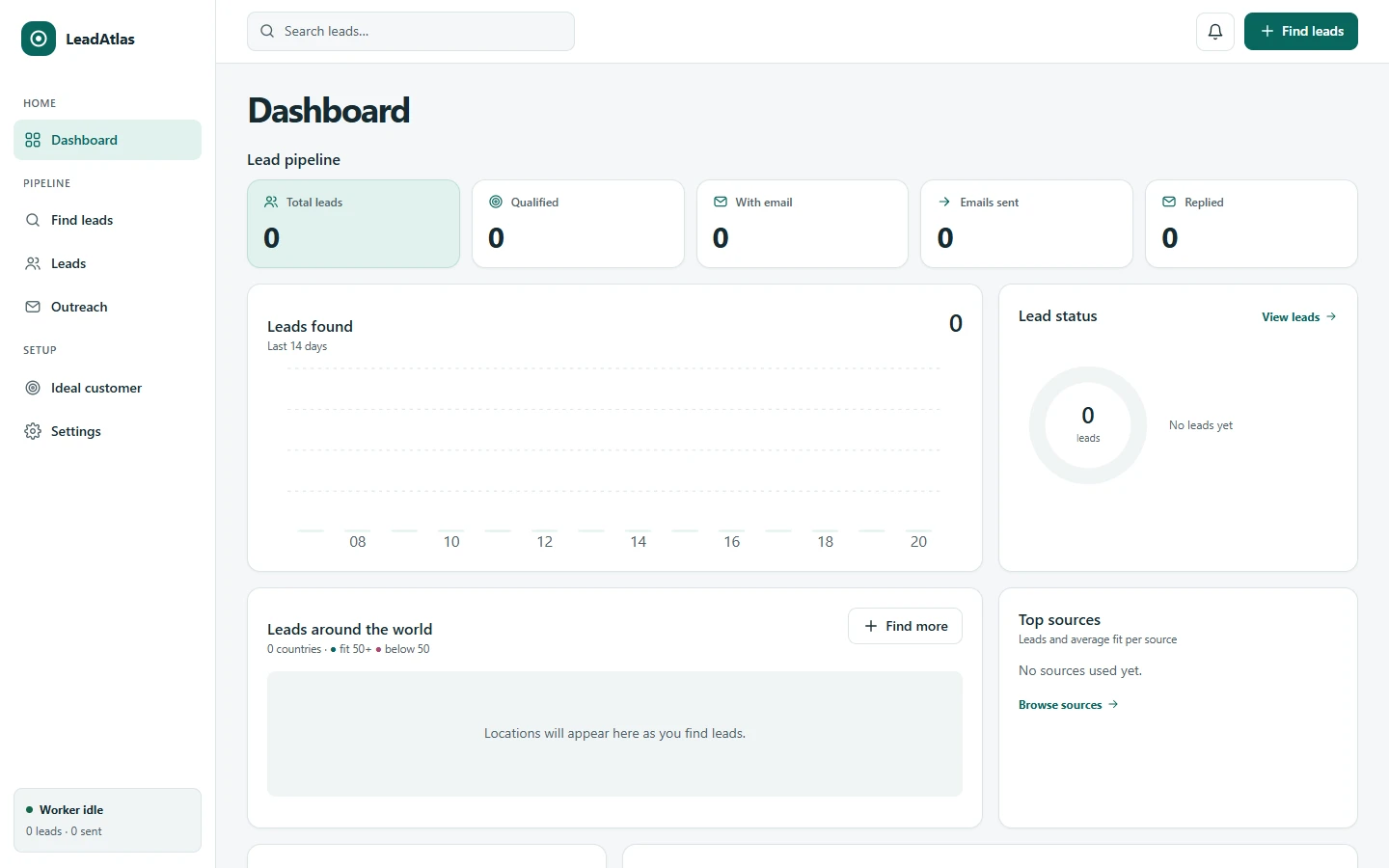
Approved drafts can be sent as a sequence using the operator's configured mailbox. The project includes a daily cap, opt-out handling, a do-not-contact list, and reply tracking that stops follow-ups. The dashboard brings together discovery volume, qualification, and outreach activity. The screenshot shows those views before a workspace has collected any leads.
How it is built
The browser interface is served by a Node.js application with SQLite storage. A background worker runs discovery, enrichment and outreach jobs. Sources use a common adapter interface so a new data source can be added without rebuilding the entire pipeline. Fit scoring runs on rules by default, with an optional local Ollama model.
More screenshots